





























Lockout-Tagout Safety padlocks | Abus, Master Lock & Brady
What makes a padlock suitable for Lockout-Tagout?
A safety padlock used as part of a Lockout-Tagout (LOTO) programme has a different purpose from a conventional security padlock. It forms part of the organisation's hazardous-energy control procedure and should be selected, identified and managed accordingly.
LOTO padlocks and devices should be suitable for the environment in which they are used, sufficiently durable for the expected conditions and clearly identifiable. Organisations should also standardise their Lockout-Tagout devices, for example through colour, shape or size, and reserve designated LOTO padlocks for energy-control purposes rather than general security applications.
The selected padlock should therefore not only fit the isolation device physically, but also fit the organisation's LOTO procedure, identification system and key-management requirements.
How to choose a Lockout-Tagout safety padlock
The right safety padlock depends on the application, the lockout device being used and the key-management system within your organisation. Important factors include the body material, shackle material and dimensions, key system, colour and identification options.
A LOTO padlock should not simply be selected on price or colour. The lock must physically fit the isolation device and the selected configuration should support the organisation's Lockout-Tagout procedure.
1. Choose the padlock body material
Safety padlocks are available in several materials, each with different characteristics. Browse the available Lockout-Tagout padlocks by body material:
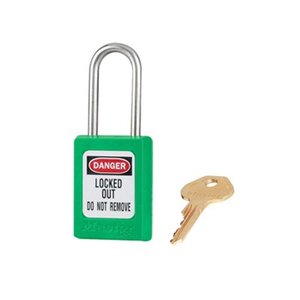
- Zenex Thermoplastic safety padlocks
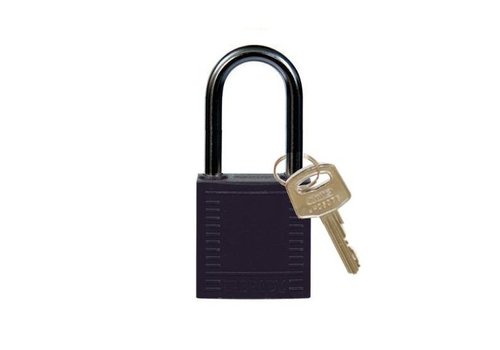
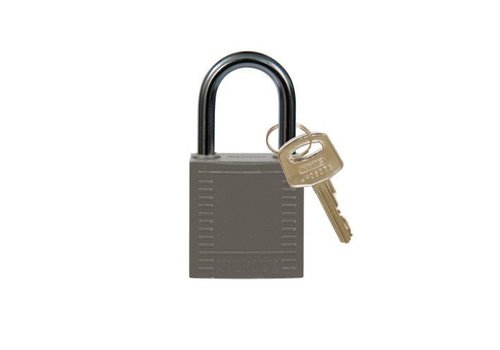
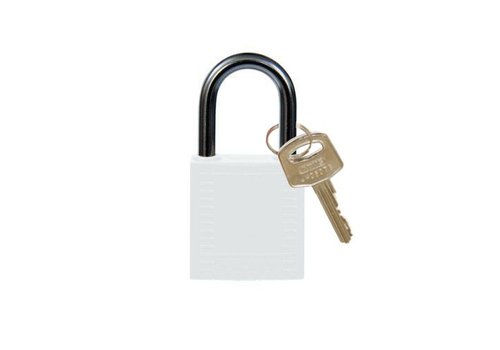
- Nylon safety padlocks
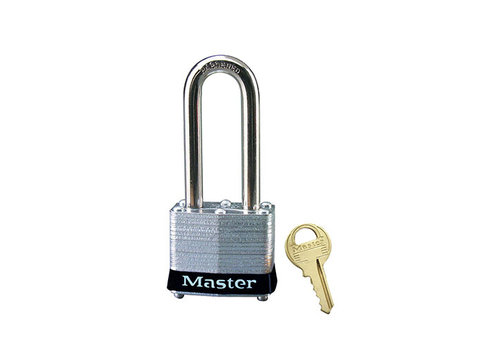
- Steel safety padlocks
- Composite covered aluminium padlocks
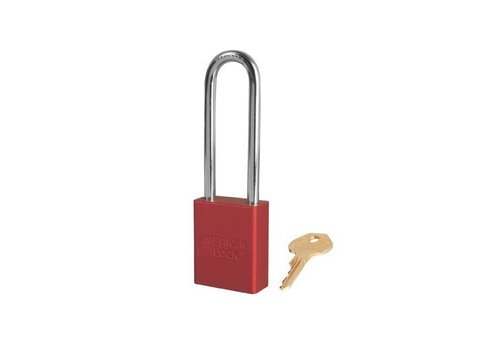
- Aluminium safety padlocks
Zenex Thermoplastic safety padlocks
Lightweight thermoplastic padlocks are widely used for personal Lockout-Tagout applications. Depending on the model, they can offer good resistance to chemicals, corrosion and temperature extremes while keeping the overall weight low.
Nylon safety padlocks
Nylon-bodied padlocks are lightweight and can be suitable for applications where reduced electrical conductivity is an important consideration. Always check the shackle material as well, because a nylon body does not automatically mean that the complete padlock is non-conductive.
Aluminium safety padlocks
Aluminium padlocks combine low weight with a robust metal body and are available in a wide range of colours and keying configurations.
Composite covered aluminium padlocks
These padlocks combine an aluminium body with a protective outer covering, providing a durable and easily identifiable finish.
Steel safety padlocks
Steel-bodied padlocks offer a strong traditional construction. When selecting a steel padlock for a Lockout-Tagout application, always check that the specific model and keying configuration are appropriate for the organisation's LOTO procedure.
2. Choose the correct shackle material
The shackle must fit through the lockout point or lockout device and should be suitable for the environment.
Hardened-steel shackles
Commonly used for general mechanical and industrial Lockout-Tagout applications.
Stainless-steel shackles
Suitable where additional corrosion resistance is required, for example in wet or demanding industrial environments.
Nylon or composite shackles
Used where reduced electrical conductivity is an important consideration. These can be particularly useful for electrical isolation applications.
Cable shackles
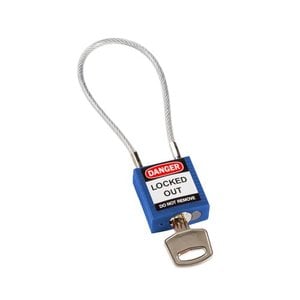
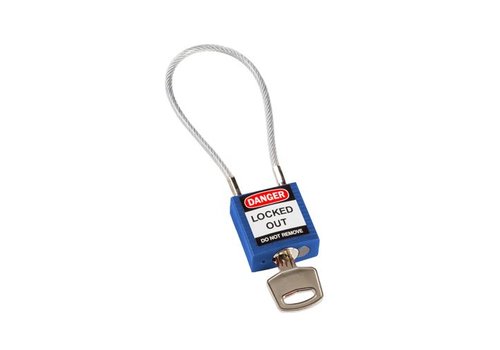
Flexible cable-style padlocks can be useful where a conventional rigid shackle does not provide enough flexibility or reach.
It is important to distinguish between the body and the shackle. A padlock with a non-conductive body and a steel shackle should not be described as a fully non-conductive padlock.
3. Select the right key system
When selecting safety padlocks, choosing the right key system is one of the most important decisions. The key system should support the organisation's LOTO procedure and ensure that responsibility and control of personal Lockout-Tagout locks remain clearly defined.
Keyed Different (KD)
With Keyed Different (KD), each padlock has its own individual operating key. Each operating key is intended to open only its corresponding padlock.
This is the most common configuration for personal Lockout-Tagout padlocks because each authorised employee can retain control of their own lock and key.
Keyed Alike (KA)
With Keyed Alike (KA), multiple padlocks are configured to operate with the same key. This can be useful when one authorised user needs to operate several padlocks as part of the same Lockout-Tagout system.
Keyed Alike should not be used to bypass individual employee control where each authorised employee is required to apply and control their own personal LOTO lock. Whether a keyed-alike system is appropriate therefore depends on the organisation's LOTO procedure and key-control requirements.
Master Keyed (MK)
Master Keyed (MK) adds an additional level of key control. The padlocks continue to operate with their normal operating keys, while an authorised master key can open multiple padlocks within a defined master-key system.
Master keying can be combined with both Keyed Different (KD) and Keyed Alike (KA) configurations:
- Keyed Different + Master Keyed (KD + MK): each padlock has its own individual operating key, while the master key can open multiple padlocks within the defined master-key system.
- Keyed Alike + Master Keyed (KA + MK): a defined group of padlocks shares the same operating key, while the master key can open multiple padlocks or keyed-alike groups within the defined master-key system.
Master-key systems can be useful for organisations that require structured key management. Access to master keys should be tightly controlled, and their purpose, authorised use and management should be clearly defined within the organisation's Lockout-Tagout procedure.
When designing a larger key system, the relationship between individual keys, keyed-alike groups and master keys should be planned carefully so that the system supports the organisation's LOTO procedures, responsibilities and key-control requirements.
4. Check the shackle diameter and height
Always verify that the padlock physically fits the isolation device before ordering. Two dimensions are especially important:
Shackle diameter
The shackle must be narrow enough to pass through the lockout device, hasp, breaker lockout or valve lockout.
Shackle height or clearance
The shackle must provide sufficient clearance around the isolation point.
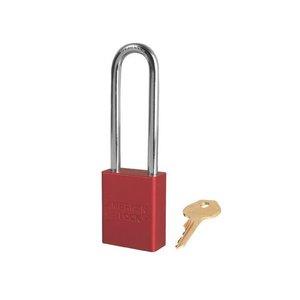
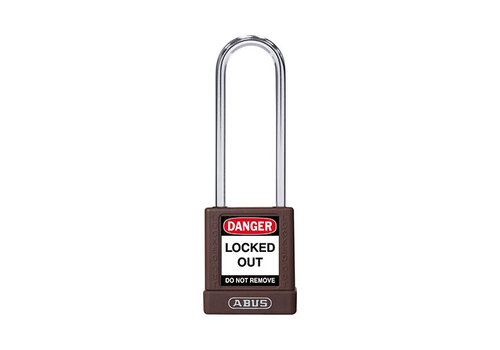
Standard shackles are suitable for many common Lockout-Tagout devices. A long-shackle padlock can be useful when additional reach is required, while a flexible cable-shackle model can provide extra flexibility in less accessible applications.
5. Use colour coding and identification
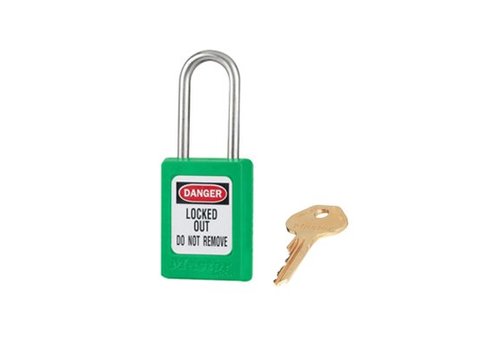
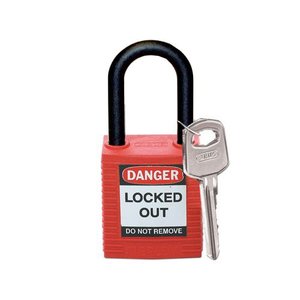
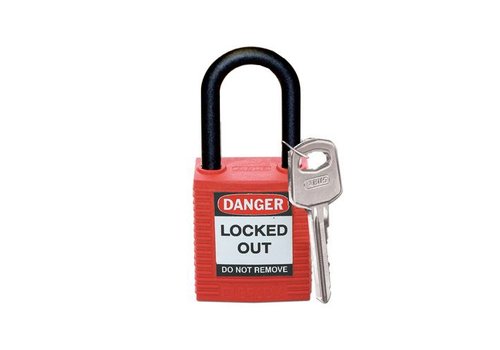
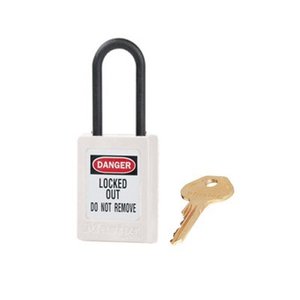
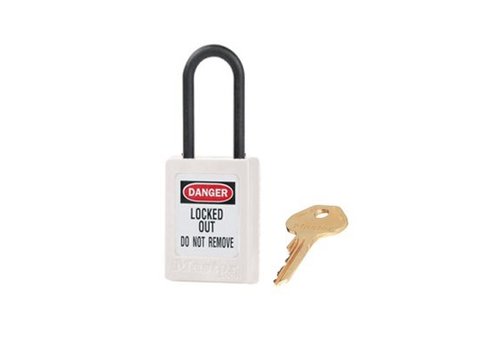
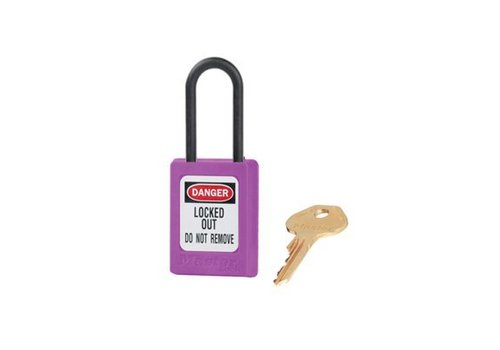
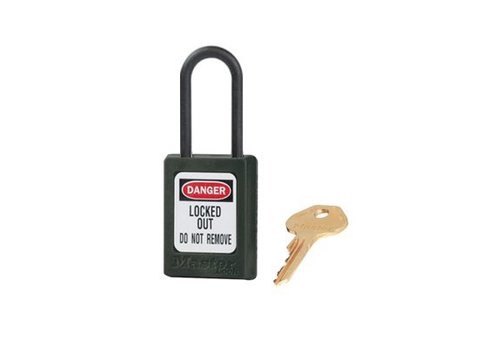
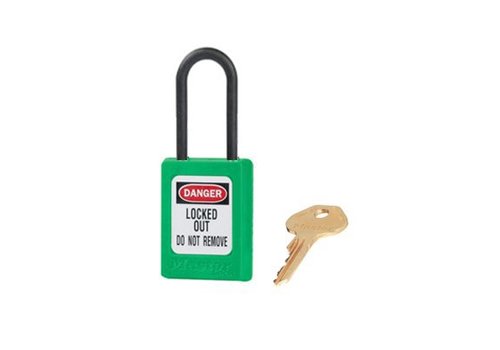
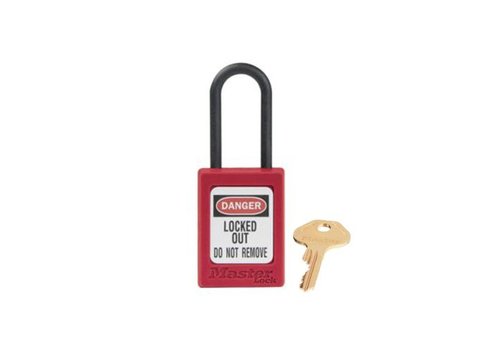
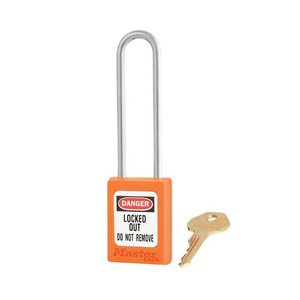
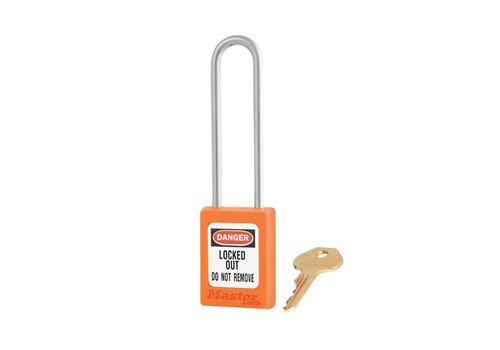
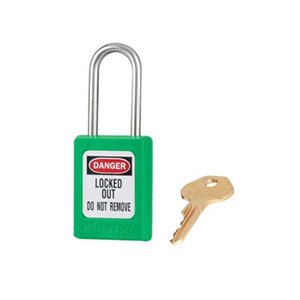
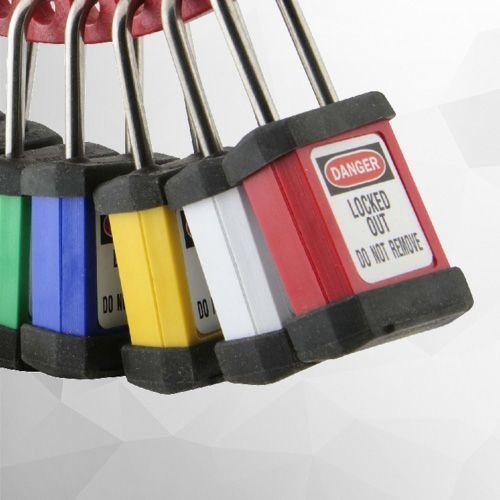
LOTO safety padlocks are available in many colours, including red, blue, green, yellow, black, orange, white and other colours.
Organisations can use colour coding to distinguish between, for example:
- Employees or departments
- Maintenance disciplines
- Contractors
- Production areas
- Types of isolation
There is no single universal colour code that applies to every Lockout-Tagout programme. The meaning of each colour should therefore be clearly defined and standardised within the organisation's own LOTO procedure.
LOTO devices should also be clearly identifiable. Laser engraving or labels can provide additional identification, such as the employee name, department, identification number or company name.
Master Lock, Brady or ABUS safety padlocks?
Lockout-Tagout-Shop supplies safety padlocks from Master Lock, Brady and ABUS, allowing you to compare several established industrial brands within one webshop.
Master Lock safety padlocks
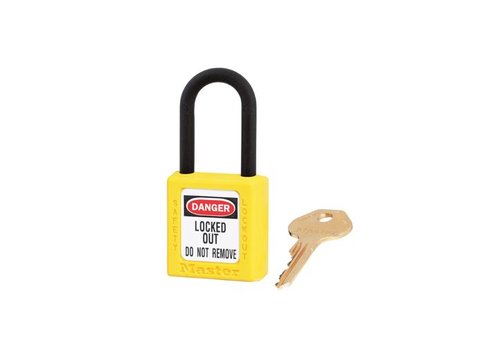
Master Lock offers a broad range of dedicated Lockout-Tagout padlocks, including well-known safety padlock series such as the Master Lock 410 and 406 series. Depending on the model, different body materials, shackle materials, colours and keying configurations are available.
Brady safety padlocks
Brady offers a wide range of Lockout-Tagout safety padlocks as part of its broader energy-control and workplace-safety portfolio. Options are available in different materials, colours, shackle configurations and key systems.
ABUS safety padlocks
ABUS supplies industrial safety padlocks in a variety of body and shackle configurations, including aluminium and coated-aluminium models for Lockout-Tagout applications.
The most suitable brand and model depend on the required dimensions, material, shackle type, key system, working environment and existing standardisation within your facility.
Safety padlock selection overview
| Requirement | What to consider |
|---|---|
| Personal Lockout-Tagout padlock | Keyed Different |
| One authorised user requires several locks | Keyed Alike, where suitable within the LOTO procedure |
| Centralised or hierarchical key-management requirements | Consider a controlled Master Keyed system |
| Reduced electrical conductivity required | Suitable non-conductive body and shackle configuration |
| Wet or corrosive environment | Suitable corrosion-resistant body and shackle materials |
| Additional reach required | Long-shackle padlock |
| Flexible locking point | Cable-shackle padlock |
| Employee or department identification | Colour coding, labels and/or laser engraving |
| Small lockout-device opening | Check shackle diameter |
| Restricted or recessed isolation point | Check shackle clearance and overall dimensions |
What is the difference between a LOTO padlock and a normal padlock?
A Lockout-Tagout safety padlock is used as part of a hazardous-energy control procedure. Its purpose is different from that of a conventional security padlock. LOTO padlocks are normally dedicated to energy-control applications and should be identifiable and standardised within the organisation.
A conventional security padlock is primarily intended to prevent unauthorised access or theft. That does not automatically make it suitable for use as a personal Lockout-Tagout padlock.
The padlock used within a LOTO system should therefore match the organisation's energy-control procedure, identification system, key-management requirements and the physical requirements of the specific isolation point.
Popular Lockout-Tagout padlock applications
Safety padlocks can be used together with many different types of lockout equipment, including:
- Circuit breaker lockouts
- Valve lockouts
- Ball-valve lockouts
- Gate-valve lockouts
- Plug lockouts
- Pneumatic lockouts
- Cable lockouts
- Lockout hasps
- Group lock boxes
- Lockout stations
The padlock forms part of the overall energy-isolation system. The appropriate lockout device is used to secure the energy-isolating device in its safe or off position, after which the safety padlock keeps the lockout device secured in place.
Applying a lock is only one part of a complete Lockout-Tagout-Tryout procedure. Hazardous stored or residual energy must also be controlled, and the effectiveness of the isolation must be verified before work begins.
Frequently asked questions about Lockout-Tagout safety padlocks
What is a Lockout-Tagout safety padlock?
A Lockout-Tagout safety padlock is a padlock used as part of a hazardous-energy control procedure to secure a lockout device applied to an energy-isolating device during maintenance, servicing or other work. The lock helps keep the isolation in place until the authorised employee removes their personal LOTO device in accordance with the applicable procedure.
What is the difference between Keyed Different and Keyed Alike?
With Keyed Different, each padlock has its own individual operating key. With Keyed Alike, multiple padlocks can be opened with the same key.
Keyed Different is commonly used for personal LOTO locks because each authorised employee can retain control of their own lock and key. Keyed Alike can be useful when one authorised user requires multiple locks, but it should not be used to bypass individual employee control where personal locks are required.
What does Master Keyed mean?
Master Keyed (MK) adds an additional level of key control in which an authorised master key can open multiple padlocks within a defined system. Master keying can be combined with both Keyed Different (KD) and Keyed Alike (KA) configurations. The use and control of master keys should be defined within the organisation's Lockout-Tagout procedure.
Which shackle material should I choose?
For general industrial Lockout-Tagout applications, a hardened-steel shackle is commonly used. Stainless steel can be considered for more corrosive environments. Nylon or composite shackles can be used when reduced electrical conductivity is important.
Always check the entire padlock construction rather than assuming that a non-conductive body also means the shackle is non-conductive.
Which colour safety padlock should I use?
There is no single universal colour requirement for all LOTO programmes. Organisations often use colours to identify employees, departments, contractors or specific applications. The chosen colour system should be clearly defined and standardised within the organisation's Lockout-Tagout procedure.
Can Lockout-Tagout padlocks be engraved?
Many safety padlocks can be supplied with laser engraving or other identification options. Depending on the product, this may include employee names, identification numbers, department names or company information.
How do I know whether a safety padlock fits my lockout device?
Check the shackle diameter and shackle clearance against the opening in the lockout device. The diameter must fit through the locking point and the shackle must provide enough height or reach to close properly without forcing the lock.
Are all safety padlocks non-conductive?
No. Some safety padlocks have a non-conductive thermoplastic or nylon body but still use a metal shackle. If electrical conductivity is an important selection criterion, choose a model with a suitable non-conductive body and shackle configuration.
Do you need technical support or more information about our products? Please contact our technical specialists or sales engineers.