


















Ball Valve Lockout Device for Peter Meyer Valves a Compatibility Guide
- Posted on
- By Marit Krol
- Posted in ball valve lockout, lockout device, Peter Meyer ball valve, Peter Meyer lockout
- 0
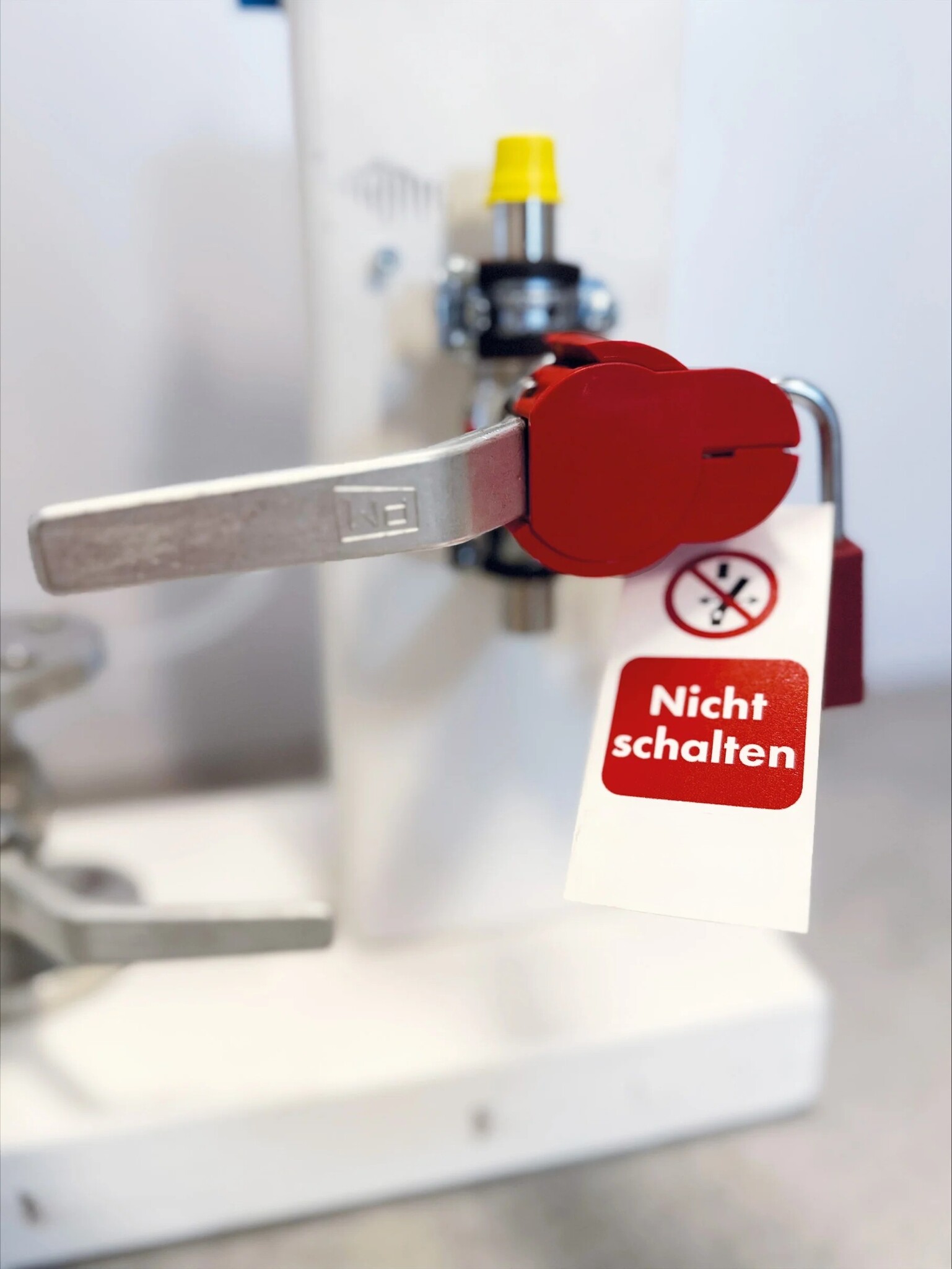
In many industrial environments, standard ball valve lockout devices do not fit all valve types. This is particularly the case with Peter Meyer ball valves, where handle geometry and construction differ from common designs.
This article explains:
- - Why standard lockout devices often fail
- - What to look for in a compatible solution
- - Which type of lockout device can be used effectively
The problem: why standard ball valve lockouts don’t fit Peter Meyer valves
Most ball valve lockout devices are designed for standard lever handles with predictable dimensions and clearance.
However, Peter Meyer ball valves often have:
- - Compact or non-standard handle shapes
- - Limited clearance between handle and pipe
- - Different thickness or coating of the handle
These factors create two common issues:
- The lockout device cannot fully enclose the handle
- The locking mechanism cannot be secured properly
As a result, the valve may remain operable even when a lockout device is applied, which is not compliant with Lockout-Tagout requirements.
What to look for in a compatible lockout device
When selecting a Lockout-Tagout device for non-standard ball valves, the following technical aspects are critical:
1. Adjustable clamping mechanism
A fixed-size device is often unsuitable. The device must adapt to:
-
Different handle widths
-
Variable spacing between handle and pipe
2. Clearance tolerance
The device must function in tight installation spaces, especially in:
-
Skid-mounted systems
-
Process installations with dense piping
3. Material strength and grip
For reliable Lockout-Tagout:
-
The device must resist deformation under force
-
The grip must prevent handle movement
4. Size range (DN / inch compatibility)
Always verify:
- Minimum and maximum valve size
- Handle length and thickness
Recommended solution for Peter Meyer ball valves
A suitable option is a compact, adjustable ball valve Lockout-Tagout device designed for smaller or non-standard handles.
One example is available here:
→ Ball valve lockout device for small and medium-sized valves
This type of device works effectively because:
- It uses an adjustable locking system
- It can be applied in limited clearance situations
- It is designed for smaller handle geometries, typical for Peter Meyer valves
Instead of relying on full enclosure, the device secures the handle in position, preventing operation.
Compatibility overview
Below is a general compatibility indication based on typical installations:
| Valve size (DN) | Compatibility | Notes |
|---|---|---|
| DN10 – DN20 | High | Typically suitable |
| DN25 – DN32 | Medium | Depends on handle geometry |
| DN40+ | Low | Larger device may be required |
Important:
Actual compatibility depends on:
- Handle length
- Handle thickness
- Available clearance
Installation method of the Peter Meyer ball valve
Correct installation is essential for proper Lockout-Tagout.
Typical steps:
- Place the valve in the required position (open or closed)
- Position the Lockout-Tagout device around or over the handle
- Adjust the device to ensure a tight fit
- Insert padlock through the locking point
- Verify that the handle cannot be moved
Always test the installation before applying Lockout-Tagout procedures.
Alternative solutions for difficult valve geometries
If a standard or compact device does not fit, alternatives include:
-
Flexible application
-
Suitable for irregular shapes
-
Less robust than dedicated devices
Universal valve Lockout-Tagout devices
- Adjustable for multiple valve types
- May require more installation time
These options are typically used when:
- Valve geometry is highly irregular
- Space constraints prevent rigid devices
Standards and compliance
Ball valve Lockout-Tagout must comply with applicable safety standards, including:
- OSHA 29 CFR 1910.147 (Lockout-Tagout)
- EN ISO 14118 (prevention of unexpected start-up)
Key requirement:
The energy-isolating device must be secured in a safe position and rendered inoperable. If a Lockout-Tagout device does not fully prevent operation, it does not meet compliance requirements.
Frequently asked questions on Peter Meyer ball valve lockout devices
Does a standard ball valve Lockout-Tagout device fit Peter Meyer valves?
In many cases, no. Non-standard handle geometry often prevents proper installation.
What size Lockout-Tagout device do I need?
This depends on:
-
Valve DN size
-
Handle dimensions
-
Available space around the valve
Are universal Lockout-Tagout devices a good alternative?
They can work, but are typically less robust and require correct installation.
Can I use a cable Lockout-Tagout device instead?
Yes, especially when rigid devices do not fit. However, they may offer less physical resistance.
How do I verify compatibility?
Check:
-
Handle size and shape
-
Clearance
-
Manufacturer specifications of the Lockout-Tagout device
Locking out Peter Meyer ball valves requires more than a standard solution. Due to non-standard handle geometry and limited clearance, many generic Lockout-Tagout devices are not suitable.
A compact, adjustable ball valve Lockout-Tagout device designed for smaller or irregular handles provides a reliable solution, provided it is correctly selected and installed.
For practical implementation, always verify compatibility on-site and ensure the device fully prevents valve operation.
Comments
Be the first to comment...